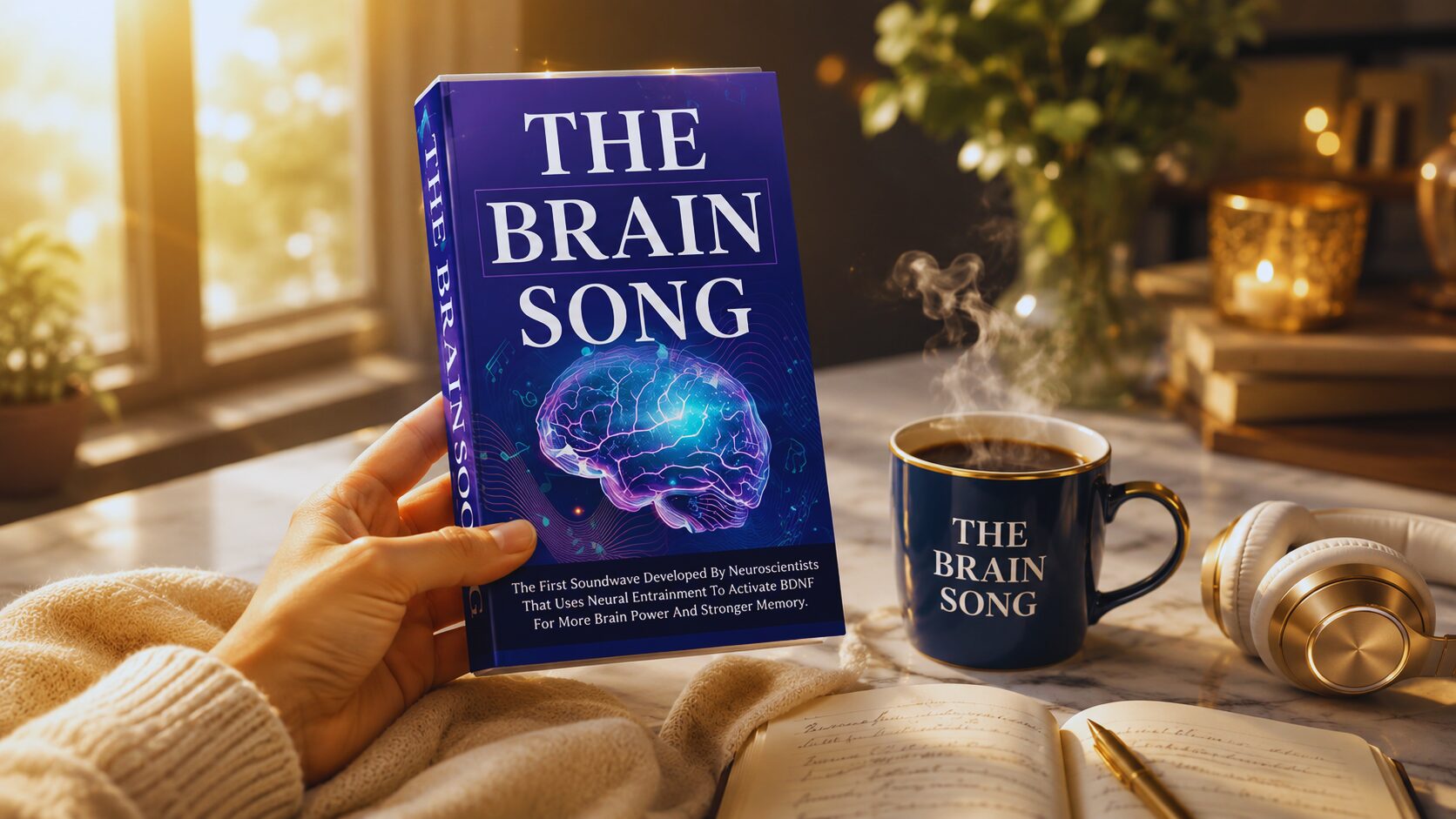
 The Brain Song is a downloadable audio program marketed as a daily brainwave-entrainment (Gamma-wave) listening routine intended to support memory, focus, and mental clarity — no supplement, app, or device required. Marketing materials for it are inconsistent on basic details, and several specific claims couldn’t be independently verified, so it’s worth reading the caveats below before treating any of its promises as established fact.
Overview
The Brain Song is sold as an audio file (or set of files) available exclusively through its official website, typically priced around $39 with a stated money-back guarantee period. It’s attributed to a “Dr. James Rivers,” described in marketing as a NASA-trained neuroscientist, though I could not locate independent verification of this person’s credentials, publications, or NASA affiliation through any standard academic or professional directory. The product is positioned within the broader “brainwave entrainment” category — the idea that specific sound frequencies can nudge the brain toward particular electrical activity patterns (in this case, Gamma waves, associated in some research with attention and information processing).
A Direct Note on Source Consistency
Before getting into specifics, it’s worth being upfront about something unusual: marketing pages for The Brain Song disagree with each other on the core mechanics of the product. Some describe a 7-minute daily session, others a 17-minute session, and at least one describes it as a “10-second hack.” A legitimate product typically has one consistent protocol. This kind of variation across “reviews” is a common sign of templated affiliate content produced in bulk with details swapped in and out, rather than independent testing or reporting. That doesn’t automatically mean the product doesn’t work at all, but it does mean the review ecosystem around it shouldn’t be trusted for factual details — and neither should attached statistics or specific scientific citations without independent verification.
How Does It Work?
The stated mechanism is that listening to specific audio frequencies can help stimulate Brain-Derived Neurotrophic Factor (BDNF), a protein genuinely linked in research to neuroplasticity and learning. That said, the leap from “BDNF matters for brain health” to “this specific audio track raises BDNF enough to meaningfully improve your memory” is a much bigger claim than the underlying science supports, and I found no clinical trial of this specific product measuring BDNF levels or memory outcomes in listeners.
Key Claims and Their Evidence Base
Gamma-wave entrainment and cognition: There is real scientific interest in gamma-frequency stimulation and its relationship to attention and memory consolidation, including some research using light and sound together (not audio alone). Audio-only entrainment research is thinner and more mixed, and results from lab studies using precise, monitored protocols don’t necessarily translate to a downloadable MP3 used at home.
The cited “2026 Nature Reviews Neuroscience meta-analysis”: One marketing source references this study by name to support audio entrainment’s superiority. I was unable to locate this meta-analysis in any searchable index. Until it can be verified, this specific citation should be treated as unconfirmed rather than cited as fact.
“100% safe, no side effects”: This kind of absolute claim is not something legitimate research on brainwave entrainment supports outright — some people report mild effects like dizziness, and entrainment audio is generally advised against for anyone with a seizure disorder, given the use of rhythmic stimulation. “No known common side effects for most healthy listeners” would be a more defensible framing than “100% safe.”
Creator credentials: “Dr. James Rivers, NASA-trained neuroscientist” could not be independently verified through standard means. Unverifiable expert credentials attached to a product are a caution flag worth taking seriously, not a detail to pass along uncritically.
Potential Benefits
If the underlying premise holds even partially, potential benefits could include a few minutes of daily relaxation or focus-oriented listening, which some people do find subjectively helpful regardless of the specific neuroscience claims attached to it. That’s a much more modest claim than “reawaken dormant neural pathways” or reverse cognitive aging, and it’s the honest ceiling of what can currently be said with confidence.
Who May Benefit Most?
People looking for a low-effort, no-ingestion relaxation or focus routine — who go in understanding the specific brain-science claims are marketing framing rather than settled research — are the more realistic fit. Anyone hoping for a substitute for medical evaluation of memory concerns, or expecting measurable, lasting cognitive enhancement, is likely to be disappointed.
Pros
No ingestion risk since it’s audio-only, unlike a supplement
Low time commitment as described (several minutes per day)
One-time purchase price rather than a subscription, per available sources
Listening to calming audio is a reasonable, low-risk relaxation practice on its own terms
Considerations
Marketing sources disagree with each other on basic product details (session length in particular), suggesting templated/mass-produced review content rather than independent verification
The creator’s credentials could not be independently confirmed
At least one specific scientific citation used to support the product could not be located and should not be treated as established
“100% safe, no side effects” is an overstated claim; anyone with a seizure disorder or history of neurological conditions should check with a doctor before using rhythmic audio entrainment
No clinical trial of this specific product’s effect on memory or BDNF appears to exist
Real memory concerns (sudden changes, confusion, disorientation) warrant a medical evaluation, not an audio program
Pricing and Guarantee
Multiple sources consistently cite a price around $39 with a stated guarantee window (reported variously as 90 days), for lifetime access to the files. Confirm current pricing and the exact guarantee terms directly on the official site before purchasing, since promotional pricing on pages like this changes often and isn’t something I can verify as current.
Where to Buy
Sold exclusively through the official website. Given the inconsistencies in the surrounding marketing content, buying only through a verified official source — and not assuming every “review” site’s specific claims are accurate — is especially important here.
👉 [INSERT YOUR HOPLINK HERE]
Frequently Asked Questions
How long is each listening session?
Marketing sources disagree — some say 7 minutes, others 17 minutes, one even describes a “10-second hack.” Check the actual product page directly, since third-party review sites for this product aren’t consistent with each other.
Is the creator a real, credentialed neuroscientist?
Marketing describes “Dr. James Rivers” as a NASA-trained neuroscientist, but I could not independently verify this person’s credentials or affiliation. Treat this claim as unconfirmed.
Is it really “100% safe with no side effects”?
That’s an overstated absolute claim. Rhythmic audio stimulation is generally considered low-risk for most healthy adults, but people with seizure disorders or neurological conditions should check with a doctor first, and “no known common side effects for most users” is a more accurate framing than a flat guarantee of zero risk.
Does it actually raise BDNF or improve memory?
BDNF is a real, well-studied protein linked to learning and neuroplasticity, but no published clinical trial of this specific audio product measuring BDNF or memory outcomes in listeners was found. The connection is plausible in theory but unproven for this product.
Should I use this instead of seeing a doctor about memory changes?
No. Audio programs like this aren’t a substitute for medical evaluation of new, sudden, or worsening memory or cognitive symptoms.
Final Verdict
The Brain Song is a low-risk, low-cost audio product built around a real but early-stage area of neuroscience (gamma-wave entrainment and BDNF), marketed with claims — a specific named “meta-analysis,” an unverified expert’s credentials, an absolute safety guarantee — that go further than what’s independently confirmable. The marketing ecosystem around it is also inconsistent on basic facts like session length, which should lower confidence in any specific numbers you see repeated across review sites. It may be a reasonable low-stakes relaxation habit for some people, but it shouldn’t be treated as a proven memory-enhancement tool, and anyone with neurological conditions should check with a doctor before trying rhythmic audio entrainment.
👉 [INSERT YOUR HOPLINK HERE]
References
NIH National Institute of Neurological Disorders and Stroke — Brain basics (https://www.ninds.nih.gov)
PubMed — Brain-derived neurotrophic factor and memory (search: “BDNF memory neuroplasticity review”)
PubMed — Gamma-frequency entrainment and cognition (search: “gamma entrainment cognitive function”)
Epilepsy Foundation — Photosensitive and rhythmic-stimulation seizure triggers — https://www.epilepsy.com
Mayo Clinic — Memory loss: When to see a doctor — https://www.mayoclinic.org
Harvard Health Publishing — Can brain training work? — https://www.health.harvard.edu
Better Business Bureau — company listing search (verify current standing before purchase)
Leave a Reply